House Extension Drawings
Rear, side, wrap-around, and double-storey extension designs. Maximise your living space without moving.
Overview
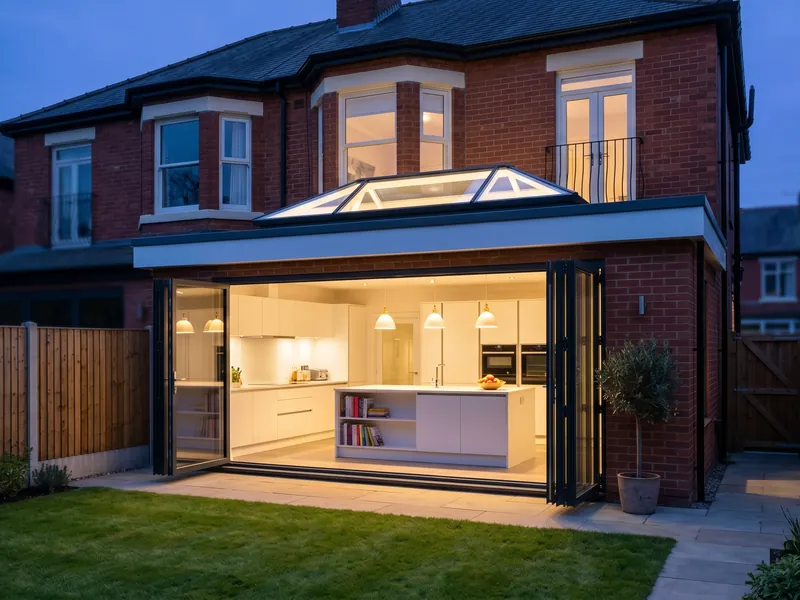
A house extension is one of the best ways to gain the extra space your family needs without the expense, stress, and stamp duty of moving. Whether you're planning a single-storey rear kitchen-diner, a side return infill, a two-storey extension, or a full wrap-around transformation, professional architectural drawings are essential for planning approval, building regulations, and accurate construction. We design extensions that work with your existing property — complementing the architecture, optimising natural light, and creating spaces that genuinely improve your daily life. Our drawings cover every stage: planning application (where needed), building regulations, structural coordination, and construction details. We work with you from the initial concept through to a builder-ready package.
What's Included
- Planning permission drawings (existing & proposed)
- Building regulation construction drawings
- Structural engineering coordination
- Foundation & ground works details
- Party Wall Act guidance and drawings
- Neighbour consultation drawing pack
- Roof construction details
- Drainage connection and layout
Why Choose QM Designs
Avoid Moving Costs
Estate agent fees, stamp duty, solicitors, surveys, removals — moving is expensive. An extension typically costs less and adds equivalent value to your home.
Stay in Your Area
Keep your children in their school, maintain your friendships and routines, and stay in the neighbourhood you love.
Bespoke Design
Unlike buying a different house, an extension is designed exactly for your needs — your layout, your kitchen, your living space.
Add Significant Value
A well-designed extension can add £50,000–£150,000+ to your property value, often exceeding the cost of the build itself.
Maximise Natural Light
Modern extensions with bi-fold doors, roof lanterns, and strategic window placement can transform a dark, cramped kitchen into a light-filled family space.
Our Process
Initial consultation — discuss your needs, budget, and ideas
Site visit & detailed measured survey
Design concepts and layout options
Planning submission (or PD confirmation)
Building regulation technical drawings
Structural engineer coordination
Construction-ready document set delivered
Key Considerations
Permitted Development vs Planning Permission
Single-storey rear extensions can extend up to 4m (detached) or 3m (semi/terraced) under Permitted Development without planning permission. Larger extensions up to 8m/6m may be possible through Prior Approval. Two-storey extensions almost always require planning permission. We assess your PD rights and advise the best route.
Party Wall Act
If your extension is built on or near the boundary line, or if excavations are within 3–6 metres of a neighbouring building, you may need to serve Party Wall notices under the Party Wall Act 1996. We provide the drawings needed for the Party Wall process and advise on your obligations.
Building on Different Ground Conditions
Foundation design depends on ground conditions — clay, sand, gravel, rock, or filled ground all require different approaches. Trees near the extension can also affect foundation depth (especially on clay soils). We specify appropriate foundation types based on site conditions.
Impact on Existing Services
Extensions often affect existing drainage, electricity, and gas runs. We identify these clashes during the design phase and incorporate diversions or modifications into the drawings, avoiding costly surprises during construction.
Frequently Asked Questions
How far can I extend without planning permission?
Under Permitted Development, single-storey rear extensions can extend up to 4m (detached houses) or 3m (semi-detached and terraced). Through the Prior Approval process (formerly the Larger Home Extension scheme), you may be able to extend up to 8m (detached) or 6m (other houses), subject to neighbour consultation.
Do I need a Party Wall Agreement?
If your extension is built on the boundary line, up to the boundary line, or involves excavations within 3–6 metres of a neighbouring building, you'll need to serve Party Wall notices under the Party Wall Act 1996. This applies to most side extensions and many rear extensions on terraced or semi-detached properties.
How long does a house extension take to build?
A single-storey extension typically takes 10–16 weeks to build. A two-storey extension may take 16–24 weeks. This doesn't include the design and approval phase — allow 3–6 months for drawings, planning (if needed), and building control approval.
What foundations will my extension need?
Foundation type and depth depend on ground conditions. Standard strip foundations are typically 1m deep but may need to be deeper on clay soils or near trees. We specify foundation requirements based on local ground conditions and British Standards.
Can I build a two-storey extension?
Yes, subject to planning permission. Two-storey extensions must not extend beyond the rear wall of the original house by more than 3m, and they must be at least 7m from the rear boundary. Design and materials should match the existing house.
Will I need to move out during building work?
It depends on the scale of works. Most homeowners stay in their property during a single-storey extension, though the kitchen may be out of use for a few weeks. Larger projects involving structural work to the existing house may require temporary relocation.
How much does a house extension cost to build?
Build costs vary by location, specification, and complexity. As a rough guide in 2026, expect £1,800–£2,500 per m² for a single-storey extension and £1,500–£2,200 per m² for a two-storey extension (London prices are typically 20–30% higher). We can advise on design choices that optimise your budget.
Do I need an architect or can I use a designer?
You don't legally need a registered architect — architectural designers and technologists can prepare drawings to the same standard. What matters is experience, quality, and technical competence. Our team has designed hundreds of extensions across the UK.
What about drainage and services?
Extensions often require modifications to existing drainage. If you're building over or near a public sewer, you'll need a Build Over Agreement from your water company. We identify drainage constraints early and design around them.
Can I extend my leasehold property?
Leasehold properties may require freeholder consent before building work. Check your lease for any restrictions or requirements. We can prepare the drawings needed to support your application to the freeholder.
Need House Extension Drawings?
Get a free, no-obligation quote tailored to your project. We respond within 24 hours.