Building Regulations are a set of legal requirements that apply to most building work in England and Wales. They exist to ensure that buildings are safe, energy efficient, and accessible. Unlike planning permission, which deals with whether you can build, Building Regulations deal with how you build.
What Do Building Regulations Cover?
The regulations are divided into approved documents, each covering a different aspect of construction:
- Part A — Structure: Ensures the building can withstand loads and forces safely
- Part B — Fire Safety: Covers fire detection, escape routes, and fire resistance of materials
- Part C — Contamination and Moisture: Protects against damp and hazardous substances
- Part F — Ventilation: Ensures adequate air quality in all rooms
- Part L — Energy Efficiency: Sets minimum insulation values and energy performance standards
- Part M — Access: Ensures reasonable access for disabled people
- Part P — Electrical Safety: Covers electrical installations in dwellings
When Do You Need Building Regulation Approval?
Building regulation approval is required for most construction work, including:
- House extensions and loft conversions
- Internal structural alterations such as removing load-bearing walls
- New heating systems or boiler installations
- Electrical rewiring or new circuits
- Replacement windows and doors
- New bathrooms or drainage work
- Change of use of a building
Even small projects that do not require planning permission often still need Building Regulations approval. Failing to obtain approval can result in enforcement action and problems when selling your property.
Building Regulations vs Planning Permission
These are two completely separate processes. Planning permission is about the principle of development. Building regulations are about the technical quality of the construction. You may need one, both, or neither depending on your project.
The Approval Process
There are two main routes to Building Regulations approval:
- Full Plans Application: You submit detailed technical drawings before work starts. The building control body checks them and either approves or requests amendments. This is the recommended approach.
- Building Notice: You notify building control before starting work, and they inspect at various stages. This is quicker but riskier.
What Drawings Are Needed?
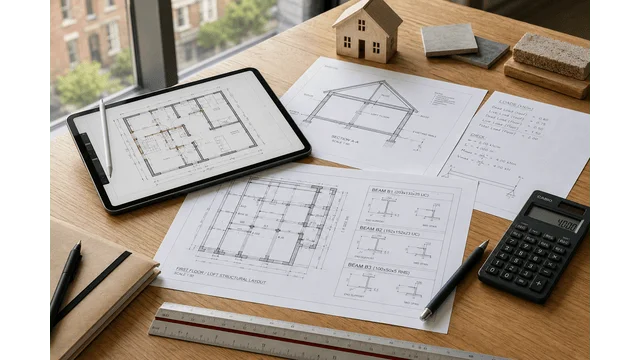
Building regulation drawings typically include construction detail sections, structural calculations, insulation specifications, drainage and ventilation plans, and fire safety details including escape routes.
QM Designs Building Regulation Service
At QM Designs, we prepare comprehensive building regulation drawing packages for all types of residential projects. We coordinate with structural engineers and work directly with building control officers. Learn more about our building regulation drawing service.